Showing posts with label INF505. Show all posts

Wednesday, 28 May 2014

INF505 Activity 5: website evaluation

Description of activity
For this activity I evaluated two library websites, one for children and one for teens.  To conduct the evaluation, I used aspects of Mathew’s (2009) ten web design features for libraries and Lazaris’ (2009) tips for designing websites for children.  I conducted two evaluations as the features appropriate for each of these groups are varied.  I also looked at these websites in terms of how the library can use their children and youth websites to support the information needs and behaviours of their users.

The two websites I evaluated were:
Children: Newcastle Region Library http://www.newcastle.nsw.gov.au/services/newcastle_library/Just_for_kids

Youth: Sunshine Coast Libraries
http://library.sunshinecoast.qld.gov.au/sitePage.cfm?code=teens

What did you learn? How was this relevant to your professional practice as a librarian for children/young adults?
From conducting this evaluation and looking at what makes a good library website for children and youth, I learned skills applicable to my professional practice.  A key element of website design that I learned was the necessity of library websites and pages these days to be mobile-friendly.  Both websites I evaluated were not easily adaptable to smaller screens of mobiles and tablets, which means patrons are less likely to use them (Mathews, 2009). As a children’s and youth librarian, I would need to ensure that our website had appropriate pages for these groups to locate information and resources relevant to their needs and enhance the attractiveness of these sites in terms of design.  Evaluating other libraries’ websites allows me to pick and choose the elements that would work best in my situation.

I also deepened my understanding of the information search patterns of young people and extrapolated ideas on how libraries (both school and public) can support young users in searching, locating and evaluating information for their needs, either educational or personal.  Shenton and Dixon’s (2003) article was particularly useful in this as it led me to further research the topic for my own interest.

Discussion
Many parents often send their children and teens to libraries to find information for school assignments, so libraries need to have a well-developed set of resources to assist young people in finding quality resources both online and in the library.  Library websites targeted to children and teens are a useful way of doing this.

In terms of assisting children and youth locate resources to meet their educational and leisure information needs, libraries can develop a digital library which includes a collection of resources gathered for a particular group and organised for easy retrieval (Large, Nesset & Beheshti, 2008, p. 153).  These specific digital libraries can support children and youth in their information seeking better than the wider library website. In particular, children and teens are at different stages of cognitive development (Large, et al. 2008) and also have slightly differing information needs and preferred search tools.

References
Large, A., Nesset, V. & Beheshti, J. (2008). Children as information seekers: What researchers tell us, New Review of Children’s Literature and Librarianship, 14(2), 121-140. doi: 10.1080/13614540902812631

Lazaris, L. (2009, November 27). Designing websites for kids: Trends and best practices, Smashing Magazine. Retrieved from http://www.smashingmagazine.com/2009/11/27/designing-websites-for-kids-trends-and-best-practices/

Mathews, B. (2009). Web design matters. Library Journal, 134(3), 24

Shenton, A.K. & Dixon, P. (2003). Models of young people’s information seeking. Journal of Librarianship and Information Science, 35(5), 5-22 doi: 10.1177/096100060303500102

Monday, 26 May 2014

INF505 Activity 4: Young people's book awards

Description of activity
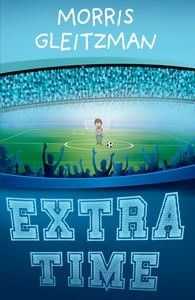
For this activity, I reviewed a KOALA shortlisted book, Extra Time by Morris Gleitzman.  This book is shortlisted in the KOALA awards (Kids Own Australian Literature Awards) category of fiction for younger readers.  My review is aimed at librarians, parents and teachers rather than children.
The review can be found at:
https://www.goodreads.com/review/show/948859409?book_show_action=false

What did you learn? How was this relevant to your professional practice as a librarian for children/young adults?
My first step when completing this activity was to discover the elements of a successful children’s book review.  I felt this was important in a professional sense as children and young adults librarians need to be able to relate the quality and relevance of books both to children and their parents.  By writing a book review, I was able to articulate features of books that might appeal to children (and their parents); for example, setting, characters, humour, themes, length, etc.

Were any gaps in your knowledge revealed? How might you fill these gaps?
From looking at just the KOALA website, I became aware that there are more children’s book awards than I previously knew about.  By following the shortlists and announcement of winners in these book awards, I will more easily be able to find quality children’s literature.

Discussion of topic: young people’s book awards
Young people’s book awards not only provide acclaim and increased sales for the author, they also are useful as a collection selection tool (Hateley, 2012, p.191).  In fact, many libraries have written into their collection development policy that awarded books are one of the criteria for selection.  By privileging books that are recognised by book awards, librarians need to be aware of how the awards are judged and by whom.

Children’s literature is designed to entertain and socialise young readers to the national identity (Hateley, 2012, p. 193) and so Australian book awards are useful in finding appropriate resources to do this.  In Australia, book awards for children and youth include the Children’s Book Council of Australia (CBCA) awards which are selected and judged by a panel of experts from fields such as teachers, librarians, publishers and academics.  The books which win these awards are considered to have literary merit and popularity is not an important factor (Macleod, 2011, p.33).

The CBCA also has developed young people’s book awards which children and youth themselves can vote for.  These are run through the state branches, are often voluntary and provide no financial reward.  The New South Wales’ version is called KOALA: Kid’s Own Australian Literature Awards.

Recently, there has been a new awards group for young people’s books: the Prime Minister’s Literary Awards for children and youth.  The children’s categories debuted in 2010 but do not appear to have a large amount publicity and respect within the industry yet.

These book awards are useful not only for assisting librarians in selecting books for their collections.  Killeen (2009) presents some other benefits for adding award-winning books to the collection: they can also be used to promote discussion about literature, and improve circulation as children and parents are more likely to choose books with award stickers.  While young people’s book awards are not the only measure of literary merit and entertainment value for children, they are a useful platform to use.

References
Hateley, E. (2012). And the winner is ?: Thinking about Australian book awards in the library. The Australian Library Journal, 61(3), 189-199.

Killeen, E. B. (2009). Awards! what are they good for? Teacher Librarian, 36(4), 66.

Macleod, M. (2011). The Children's Book Council of Australia Book of the Year and the image problem. Access, 25(1), 27-34.

Sunday, 25 May 2014

INF505 Activity 3: censorship

Retrieved from Flickr: florian.b
https://www.flickr.com/photos/florian_b/44227093/in/photostream/
Description of activity
To explore the topic of censorship, I created a Prezi presentation for upper primary school students on banned books.  It can be found at http://prezi.com/zwzb6frilqjy/banned-books-whats-the-big-deal/.

What did you learn? How was this relevant to your professional practice as a librarian for children/young adults?
This activity was useful on two fronts: it encouraged me to develop skills in using a new software tool and it provided an opportunity to explore censorship in Australia.  Being able to use a variety of programs to create presentations will be useful in professional practice as presenting is a common task for librarians.  Whether it is to colleagues/management or to children and their parents, being able to create visually effective presentations is a necessary skill.  Children’s and youth librarians in particular need to have a solid understanding of legislation and policy relating to censorship as books aimed at these audiences often provide the most contention from parents, teachers and community members.  Understanding the library’s role in providing access to information and the reasons behind censorship and challenging books will allow me to effectively deal with any incidents in my professional practice.

Were any gaps in your knowledge revealed? How might you fill these gaps?
This activity brought to my attention the fact that I had more knowledge of the American position on censorship and banned books, and less on Australia.  Throughout this activity I tried to focus on Australian information to fill this gap.

Discussion of topic: censorship
Censorship is often a controversial topic as it is the restriction of access to information (Duthie, 2010), which is a key tenet of libraries.  In fact, ALIA (2007) has produced a statement on free access to information which acknowledges that all people should have unrestricted access to information they seek within the bounds of censorship law at a national and state level.  However, they provide a small caveat to this with the statement “within the scope of their roles and responsibilities” (ALIA, 2007).

This then provides public and school libraries with the ability to ensure that materials on the shelves for children and youth are appropriate to those age groups.  In fact, children themselves recognise the responsibility of parents, teachers and librarians in regulating material available to them based on their maturity (Isajlovic-Terry & McKechnie, 2012).

Another type of censorship is Internet filtering in public libraries. However, people generally accept this type of censorship as it is generally restricted to moral obligations (eg. blocking sites that promote pornography and other explicit material) (Duthie, 2010, p. 88).  This is also within the scope of ‘duty of care’ that librarians accept as part of their role.

Often, censorship is based on fear and emotion, with a sub-type of censorship being banning books.  Where censorship is the restriction of access to information, book banning is the removal of items from circulation (Connelly, 2009, p. 83).  More common in America than Australia, book banning stems from community members’ reactions to items found in library collections which they perceive has harmful messages or language for readers.  What can be noted from the history of censorship and book banning, is that they seldom last, in fact many classics of today have previously been banned books.

As an information professional, the best way to deal with issues of censorship and book banning is to have collection development policies and procedures for dealing with complaints relating to censorship and book banning (Connelly, 2009).

References
Australian Library and Information Association. (2007). ALIA statement on free access to information. Retrieved from  https://alia.org.au/about-alia/policies-standards-and-guidelines/statement-free-access-information

Connelly, D. S. (2009). To read or not to read: Understanding book censorship. Community & Junior College Libraries, 15(2), 83-90. doi:10.1080/02763910902832222

Duthie, F. (2010). Libraries and ethics of censorship. Australian Library Journal, 59(3), 86-94.

Isajlovic-Terry, N., & McKechnie, L. (2012). An Exploratory Study of Children's Views of Censorship. Children & Libraries: The Journal Of The Association For Library Service To Children, 10(1), 38-43.

Monday, 19 May 2014

INF505 Activity 2: Diversity

Description of activity

This activity was a review of a journal article:
Monroe, S. (2012). A world of words and wisdom: Exploring the global community of libraries and remarkable librarians in children’s literature. Childhood Education, 88(2), 108-113

What did you learn? How was this relevant to your professional practice as a librarian for children/young adults?

Writing a review of a journal article was a useful academic process that I can see being of benefit in the future.  As a professional, I believe it is also necessary to contribute to the knowledge of the field, and so being able to write a journal article or review others’ is a way to do this.  Also, being able to critically reflect on journal articles ensures that my reading in the future is not taking articles at face value, but rather looking into the environment they come from and perspectives of the authors.

Part of ALIA’s core values statement for library professionals is “respect for the diversity and individuality of all people.” (ALIA, 2007).  This core value for library professionals in Australia means that as I become a professional, I need to understand and respect the diversity in the communities where I will work.

Were any gaps in your knowledge revealed? How might you fill these gaps?

Through looking at this topic, diversity, I realised that it encompasses so much more than just different cultures/languages and so library programs and resources embracing diversity should be more than just multicultural.  I also became aware that I had not considered what resources in my library's collection I would recommend to a parent or teacher looking for diversity.  By considering sources like Monroe's and conducting catalogue searches, I should be able to find a range of children's books which address diversity.  Interestingly, there is a Twitter discussion regarding diversity in books at #weneeddiversebooks.

Discussion of topic: diversity

The activity I undertook looked at diversity in terms of multiculturalism, one of the most common themes when thinking about diversity.  Multicultural literature for children is a powerful platform for encouraging them to develop multiple viewpoints and positive concepts of themselves and others (Kirylo & Thirumurthy, 2011, p. 446).  The best way books can promote authentic experiences of diversity is by protagonists maintaining their uniqueness while still undergoing rituals and challenges that are universal (Pearce, 2003, p. 244).  This is an important topic as the world is becoming a global, connected community and the road to global understanding begins with children having access to literature and programs that promote diversity in all its forms (Naidoo, 2014, p. 10).

For children and young adults, libraries should be places where they can find information, resources and support for any information need they may have.  Therefore, library collections need to reflect a diverse range of topics and human situations so that all children and youth are able to find themselves reflected in the literature as well as being able to access information about themselves (Naidoo, 2014, p. 13).  For example, young people who identify as LGBTQ could be provided with information from well-maintained sites like www.leewind.org.  This is another aspect of diversity that is gaining momentum in recognition as a need for libraries to address.

References

Australian Library and Information Association. (2007). ALIA core values statement. Retrieved from https://alia.org.au/about-alia/policies-standards-and-guidelines/alia-core-values-statement

Kirylo, J. D., & Thirumurthy, V. (2011). Issues in education: Building cultural bridges through international children's literature. Childhood Education, 87(6), 446-447. doi: 10.1080/00094056.2011.10523229

Naidoo, J. C. (2014). The importance of diversity in library programs and material collections for children [white paper]. Retrieved from http://www.ala.org/alsc/importance-diversity

Pearce, S. (2003). Messages from the inside?: Multiculturalism in contemporary Australian children’s literature. The Lion and the Unicorn, 27(2), 235-250.

Saturday, 17 May 2014

INF505 Activity 1: Digital materials/resources and technology

Description of activity
When stories are more than paper: Transmedia and young adult literature

A webinar (online seminar) by Rachel McDonald and Jackie Parker
Tuesday, January 7, 2014 

Developed by Robert Pratten of Transmedia Storyteller
Retrieved from
http://www.tstoryteller.com/transmedia-storytelling

This was an hour presentation covering a range of topics related to transmedia and young adult literature.  The seminar defined transmedia as a single story being told in multiple media, for example text, graphics, video, music, etc. and showed some examples of authors and publishers creating transmedia literature for youth.  There was also a segment on evaluating transmedia and whether it is worthwhile to adapt books to transmedia.  Finally, the seminar presented tools that teachers and librarian could use themselves or in projects for youth to create transmedia versions of books. The seminar concluded with a question and answer section.

What did you learn? How was this relevant to your professional practice as a librarian for children/ya?

I was aware of enhanced books and apps for picture books but hadn’t realised the wealth of them for children and youth.  By providing examples of authors and publishers already presenting transmedia stories, I could identify uses for this in programming with children and youth in the future.  The presenters also provided a useful list of evaluation tools which would assist in future practice as a professional in selecting the right resources, not only for transmedia, but for other activities as well.  These evaluation tools included accessibility, cost, functionality, relevancy, entertainment and readability.  The seminar also touched on the digital divide and how libraries can bridge the gap through access to technology and providing workshops in appropriate usage of technology. 


Were any gaps in your knowledge revealed? How might you fill these gaps?

Through this seminar, I realised that I really didn’t know much about the Australian publishing industry: who the major publishers are for children and youth, what trends are happening in publishing, where Australia is in terms of publishing and selling ebooks and other e-resources to libraries.  In order to increase my knowledge in this area, I should keep up to date through reading more regularly journals like Magpies, School Library Journal, VOYA, The Bookseller and so on.  This is possible as the public library where I work currently collects these titles.


Discussion of topic: Digital materials/resources and emerging technologies

The webinar was a great introduction to digital materials and resources for children and youth.  With children and youth spending an average of 7 hours per day consuming media (Fasick & Holt, 2013, p. 23), transmedia books provide an inventive way for them to engage in reading practices.   Media convergence means that children can move seamlessly between media (Spatariu, Peach & Bell, 2012, p. 27) and transmedia ebooks support the multiple literacies that new generations will need to participate socially and economically today (McShane, 2011, p.392).

With these emerging technologies and digital materials, libraries are well placed to provide programs in effective use of technology and provide access to these technologies through lending devices to those in disadvantaged communities (Fasick & Holt, 2013, p. 24) which may help reduce the digital divide (Spatariu, Peach & Bell, 2012, p. 36).   

Emerging technologies also have an impact on the collection development for children’s and youth libraries in that selecting electronic materials have additional criteria, in terms of formats, equipment and compatibility (Fasick & Holt, 2013, p. 85).


References
Fasick, A. M. & Holt, L. E. (2013). Managing children’s services in libraries. (4th ed.). Santa Barbara, California: Libraries Unlimited.

McShane, I. (2011). Public libraries, digital literacy and participatory culture, Discourse: Studies in the Cultural Politics of Education, 32(3), 383-397. doi: 10.1080/01596306.2011.573254

Spatariu, A., Peach, A., & Bell, S. (2012). Enculturation of young children and technology. In S. Blake, D. Winsor, & L. Allen (Eds.) Technology and young children: bridging the communication-generation gap, 24-48. doi:10.4018/978-1-61350-059-0.ch002